Proudly Ugandan. Trusted Internationally.
Seven Checks Before
You Choose a Ugandan
Produce Exporter
Seven checks for vetting a Ugandan fresh produce exporter: the certifications, handling proof, references and questions that separate a reliable partner from a costly mistake.

Gold Award 2018/19
A premium origin since 2001 · The checks that protect every shipment · Ready to source? Request an export quote
25
Years of Exports
28
Export Products
20+
Countries Served
1
Business-Day Quote
TL;DR: Quick Answer
To choose a reliable Ugandan produce exporter, verify five things before you order: a registration and food-safety record you can check, documented handling from packhouse to aircraft, references from current buyers, the correct paperwork for your market, and a small trial shipment. A transparent exporter provides all five without hesitation.
This guide builds them into a seven-check, step-by-step checklist, adding written terms and a responsiveness test. It is written for importers, distributors, wholesalers and food-service buyers comparing Ugandan suppliers for the UK, European and Gulf markets.
How to Vet an Exporter
- An export registration you can check on the public MAAIF register is the baseline.
- Documented handling and per-shipment handling records prove freshness.
- Three current buyer references in your market are worth more than any brochure.
- Your market sets the paperwork, IPAFFS for the UK, TRACES for the EU, ESMA for the Gulf.
- A small trial shipment tests produce, timing and documents before you commit.
What This Guide Covers
- Why the right exporter decides whether produce arrives, and pays.
- The seven checks that separate a reliable exporter from a risk.
- Exactly what to verify for the UK, European and Gulf markets.
- The exact questions to put to any exporter before you order.
- The red flags that should stop a deal, and how Mashamba measures up.
Why the Right Exporter
Protects Your Money
Fresh produce is unforgiving. A shipment is perishable, time-bound and crossing a border, so a weak supplier does not just disappoint, it costs. The wrong choice can mean a rejected shipment, capital tied up in stock that cannot be sold, and empty shelves where a programme should be.
There is a second risk that buyers underrate: fraud. Trade bodies warn that the produce sector's speed and trust make it a target, with fake websites, spoofed emails and below-market offers the common pattern. The cost of choosing badly is far higher than the cost of checking carefully. Vetting is not red tape; it is how you protect both the money and the supply.
The good news is that a reliable exporter is not hard to spot once you know what to ask for. Real credentials can be verified, not just claimed. The rest of this guide is the checklist that turns a leap of faith into a sound commercial decision.
A credential you can check beats a credential you are simply told about.
That principle (verify, do not assume) runs through every step below. It applies as much to handling and references as it does to a certificate. An exporter worth working with will expect the scrutiny and make it easy.
The Seven-Point
Vetting Checklist
Work through these seven checks before you place a first order. Each one is something a buyer can verify, not merely take on trust. Together they tell you whether an exporter is built for export, or just selling the idea of it.
Verify registrations you can check. Do not accept a PDF at face value. Confirm the exporter is listed on Uganda's MAAIF register of horticultural exporters, check that a HACCP-based food-safety system runs at the packhouse, and ask for recent residue test reports from an accredited lab. If your programme requires a private standard such as GLOBALG.A.P., ask for the certificate number and check it in the issuing body's public database.
Confirm real handling capability. Freshness on arrival is set by handling, not hope. Ask how produce is graded and packed, how quickly it moves to the airport, and whether you will receive handling records for each shipment. A vague answer here is the single most common warning sign with a distant origin.
Ask for references, then use them. Request three current buyers in your own market, and actually contact them. Ask about consistency, condition on arrival and how problems were handled. Testimonials with no contactable name behind them are worth very little.
Match the paperwork to your market. Every shipment needs a phytosanitary certificate, plus your market's own requirements, IPAFFS pre-notification in the UK, TRACES pre-notification in the EU, ESMA and labelling rules in the Gulf. Confirm who prepares each document. The full set is covered in the export documentation guide.
Agree Incoterms and payment in writing. The most common terms for fresh produce are FOB and CIF, and they decide where risk passes from seller to buyer. Get the Incoterm, the price basis and the payment terms in writing. Be cautious of any exporter demanding full payment before a trial.
Test traceability with a trial shipment. A serious exporter sources from a known grower network and grades to one standard, so produce can be traced. Start with a small trial order across one or two of the 28 export-grade Ugandan products before committing to a programme. Testing a distinctive line such as Uganda's hot peppers is a good way to judge grading and condition on arrival.
Check they are real and responsive. Confirm a verifiable business address, a consistent website domain and matching email, and a person who will take a phone or video call. Responsiveness during enquiry is a fair preview of responsiveness once produce is in the air.
What to Verify
for Your Market
The checks above apply everywhere, but each market adds its own gatekeeping rules. A buyer in London, Rotterdam and Dubai is held to different standards, so the documents and certifications an exporter must satisfy differ too. Confirm the ones that apply to you before any produce moves.
| Market | Typical buyer requirements | Key import paperwork | What to ask the exporter |
|---|---|---|---|
| United Kingdom | HACCP-based packing; GLOBALG.A.P. for supermarket programmes | Phytosanitary certificate plus IPAFFS pre-notification at a Border Control Post; duty-free under the Developing Countries Trading Scheme | "Can you supply phyto documents in time for a 24-hour IPAFFS pre-notification?" |
| Europe | Residue (MRL) compliance; GLOBALG.A.P. and SMETA for retail programmes | Phytosanitary certificate, TRACES pre-notification, EU marketing standards and residue records | "Can you provide phytosanitary and pesticide-residue records for EU TRACES pre-notification?" |
| The Gulf | HACCP-based packing; Halal certification where relevant | ESMA conformity, GSO Arabic-English labelling, FIRS registration and a health certificate | "Can you meet ESMA labelling rules and provide Halal documentation?" |
In the UK, the binding step is timing: since 2024 every non-EU consignment faces border checks, and a late IPAFFS filing can leave produce waiting at the airport. A vetted exporter plans for this; how Mashamba supplies the UK market shows the routine in practice. In Europe, residue compliance decides clearance, and supermarket programmes usually add GLOBALG.A.P. on top. In the Gulf, ESMA conformity and correct bilingual labelling decide whether a shipment clears smoothly.
The practical point is simple. An exporter who already ships to your market will know these rules inside out and prepare for them as routine. The best test of a market-ready exporter is whether they raise these requirements before you do.
Questions to Ask
Before You Order
Send these six questions to any exporter on your shortlist. The answers (and how readily they come) tell you most of what you need to know. A confident, transparent exporter will reply in writing without being pushed.
Keep the replies. They become your baseline if anything is disputed later, and they make comparing two exporters straightforward. The supplier who answers all six clearly has already shown you the most important thing, that they have nothing to hide.
Red Flags That Should
Stop a Deal
Some signals are serious enough to end a conversation. None of these is about a single awkward email; each is about a pattern that puts your money or your supply at risk. If you see them, slow down and verify before you commit.
- A registration or certificate they will not let you verify, or a number that fails a public database check.
- No handling records, and only vague answers about packing and dispatch.
- No checkable references, only testimonials with no contactable buyer behind them.
- Prices well below the market, paired with pressure to commit quickly.
- A demand for full payment up front, before any trial shipment or documents.
- Mismatched email domains, no fixed business address, and reluctance to take a video call.
The reassuring flip side is that a reliable exporter welcomes scrutiny. Real exporters expect to be checked; only the risky ones resent it. If verifying the basics causes friction, that itself is the answer.
How Mashamba
Measures Up
It is fair to hold us to the same checklist. So here is how Mashamba answers each point, plainly and on the record. The aim is that you can verify what follows, rather than being asked to take it on trust.
Behind those answers sits a long track record. Mashamba has exported from Uganda for 25 years, building the grower relationships and documentation routine that keep produce moving on schedule. If you have weighed up the origin itself, the companion guide on why buyers source fresh produce from Uganda sets out the case in full.
None of this asks for blind trust. Each claim maps to something you can confirm, a certificate number, a reference call, a handling record, a trial order. That is the standard a buyer should hold every exporter to, us included.
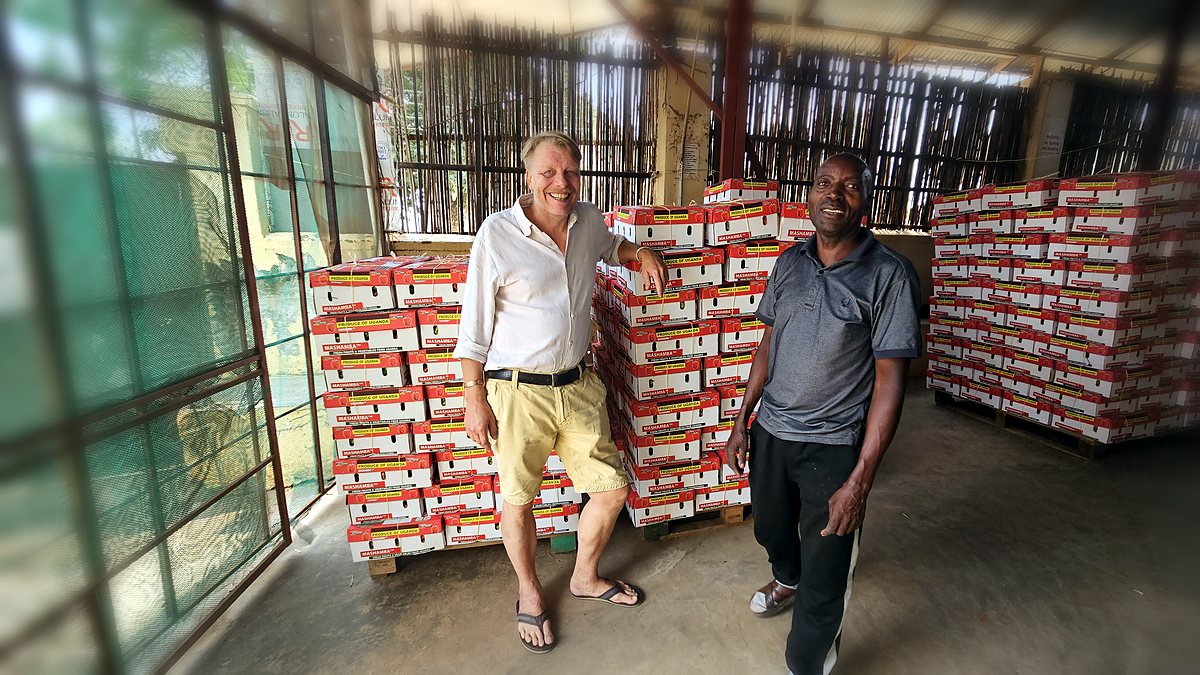
Choosing an Exporter
in Six Points
- Verify registrations you can check: a public register listing is the baseline, not a PDF.
- Treat documented handling and per-shipment handling records as non-negotiable.
- Get three current buyer references in your market, and actually contact them.
- Match the paperwork to your market, IPAFFS for the UK, TRACES for the EU, ESMA and Halal for the Gulf.
- Agree Incoterms and payment in writing, and start with a trial shipment.
- Walk away from unverifiable claims, below-market prices and demands for full prepayment.
Choosing With
Confidence
Choosing a Ugandan produce exporter is not a gamble once you know what to check. Verify the certification, confirm the handling, call the references, match the paperwork to your market, agree terms in writing, and start small. Each step replaces hope with evidence.
The exporters worth your business make that easy. They raise your market's requirements before you do, hand over a certificate number you can verify, and offer a trial shipment without hesitation. Friction at this stage is information, and it is better to learn it now than after a shipment is in the air.
Used well, this checklist does more than avoid a bad supplier. It finds you a dependable one, a partner who protects both your money and your shelves, shipment after shipment.
Vetting an Exporter,
Answered
Straight answers to the questions buyers ask when choosing a Ugandan produce exporter. Need something specific? Speak with our export team.
How do I verify a Ugandan exporter's credentials?
What certifications should a Ugandan produce exporter hold?
Should I place a trial shipment before a large order?
What Incoterms do Ugandan produce exporters usually offer?
How can I avoid scams when sourcing produce from Uganda?
How many references should I ask a produce exporter for?
Do exporter requirements differ for the UK, EU and Gulf markets?
How quickly should an exporter respond to enquiries?
Put Us to
the Checklist.
Tell us your crops, volumes and destination market, and we'll prepare a tailored export quotation, with the certifications, references and documents you need to vet us, and a reply within one business day.